Showing posts with label Personalities. Show all posts

Sunday, February 26, 2017

EUROPA 1980 – Famous People - Netherlands 23.9.1980

Queen Wilhelmina (1880-1962). Wilhelmina Helena Pauline Maria (31 August 1880 – 28 November 1962) was Queen of the Kingdom of the Netherlands from 1890 until her abdication in 1948. Wilhelmina was the only child of King William III and his second wife Emma of Waldeck and Pyrmont. She became heir presumptive to the Dutch throne, after her half brother and great uncle had died, when she was 4 years old. She became queen when her father died, when she was 10 years old. As she was still a minor, her mother served as regent until Wilhelmina became 18 years old. In 1901, she married Duke Henry of Mecklenburg-Schwerin with whom she had a daughter Juliana.
She reigned for nearly 58 years, longer than any other Dutch monarch. Her reign saw World War I and World War II, the economic crisis of 1933, and the decline of the Netherlands as a major colonial power. Outside the Netherlands she is primarily remembered for her role in World War II, in which she proved to be a great inspiration to the Dutch resistance.


Sir Winston Leonard Spencer Churchill KG OM CH TD PC DL FRS RA (30 November 1874 – 24 January 1965) was a British statesman who was the Prime Minister of the United Kingdom from 1940 to 1945 and again from 1951 to 1955. Churchill was also an officer in the British Army, a non-academic historian, a writer (as Winston S. Churchill), and an artist. He won the Nobel Prize in Literature in 1953 for his overall, lifetime body of work. In 1963, he was the first of only eight people to be made an honorary citizen of the United States.
Churchill suffered a serious stroke in 1953 and retired as Prime Minister in 1955, although he remained a Member of Parliament until 1964. Upon his death aged ninety in 1965, Elizabeth II granted him the honour of a state funeral, which saw one of the largest assemblies of world statesmen in history.
Named the Greatest Briton of all time in a 2002 poll, Churchill is widely regarded as being among the most influential people in British history, consistently ranking well in opinion polls of Prime Ministers of the United Kingdom. His highly complex legacy continues to stimulate intense debate amongst writers and historians.

Friday, December 2, 2016

Summer Stamps - Famous Personalities 19.4.1983


(50) Johan van Oldenbarnevelt  (14 September 1547 – 13 May 1619) was a Dutch statesman who played an important role in the Dutch struggle for independence from Spain.
Van Oldenbarnevelt was born in Amersfoort. He studied law at Leuven, Bourges, Heidelberg and Padua, and traveled in France and Italy before settling in The Hague. He was a supporter of the Arminians, and also supported William the Silent in his revolt against Spain, and fought in William's army.

(60) Willem Janszoon Blaeu (1571 – 21 October 1638), also abbreviated to Willem Jansz. Blaeu, was a Dutch cartographer, atlas maker and publisher. Blaeu was born at Uitgeest or Alkmaar. As the son of a well-to-do herring salesman, he was destined to succeed his father in the trade, but his interests lay more in mathematics and astronomy. Between 1594 and 1596, as a student of the Danish astronomer Tycho Brahe, he qualified as an instrument and globe maker. In 1600 he discovered the second ever variable star, now known as P Cygni.

(65) Hugo Grotius (10 April 1583 – 28 August 1645), also known as Huig de Groot, Hugo Grocio or Hugo de Groot, was a jurist in the Dutch Republic. With Francisco de Vitoria and Alberico Gentili he laid the foundations for international law, based on natural law. He was also a philosopher, theologian, Christian apologist, playwright, and poet.

Thank you Merja.

Tuesday, June 30, 2015

King of Åland Julius Sundblom - 150th Birth Anniversary

No other individual has played a similarly important role for modern, autonomous Åland as Julius Sundblom (1865-1945), also known as the "King of Åland". On 22 June 2015, Åland Post commemorated his 150th birthday with the issue of a stamp.
In the early 1900s, the world situation was unstable with ongoing wars and revolutions. The turbulent times made the people in Åland turn to the old mother country Sweden in the west. Subsequently, Julius Sundblom became the leader of the Åland Movement. At the time, he was one of the leading figures in Åland as founder of the only local newspaper and member of the Diet of Finland.
The dream of reuniting Åland with Sweden never came true, however; in 1921, the newly founded League of Nations presented a compromise that Åland become a self-governed, demilitarized province of Finland with international guarantees to protect the Swedish language and culture. Dan Nordman, history teacher and Julius Sundblom specialist, believes that it was at the time of defeat that Sundblom demonstrated his greatness.
"Despite the blow, Sundblom didn't think of starting a countermovement or try to sabotage the decision. Instead, he went all in to reunite Åland and make the best of the situation; to develop the autonomy as far as possible".
Thank you Ella.

Thursday, June 4, 2015

5 great men of the EEC 27.4.1963

The two first day covers shown here have stamps featuring a series of 5 great men of the EEC. Ludwig van Beethoven (0,20 F), Émile Verhaeren (0,20 F), Giuseppe Mazzini (0,20 F), Émile Mayrisch (0,20 F) and Hugo de Groot (0,30 F).

Here is the only stamp made by La Poste (the French postal service) depicting the composer Ludwig van Beethoven (0,20 F).  One of the greatest genius' of music, born December 16th 1770 at Bonn. His most extraordinary works were written between 1815 and 1826 - he wrote, amongst others, five sonatas for piano; in 1822 the Mass in D, a collossal and complex piece; the ninth and last symphony in 1824. In the two years of 1824/1826 he wrote five quartets. But luck abandoned him. Deaf for several years, he became ill in the winter of 1826-1827, a pulmonary congestion became apparent, then digestion troubles, a hydropisy and on March 26th 1827 he gave up."
Emile Verhaeren (21 May 1855 – 27 November 1916) was a Belgian poet who wrote in the French language, and one of the chief founders of the school of Symbolism. He was one of the most prolific poets of his era. His first collection of poems Les Flamandes was published in 1883. Inspired by the paintings of Jacob Jordaens, David Teniers and Jan Steen, Verhaeren described in a direct and often provocative, naturalistic way his country and the Flemish people. It was an immediate success in avant-garde milieus, but caused a great deal of controversy in Catholic circles. His next book Les Moines (1886) was not the success he had hoped for. This, and his health problems, led to a deep crisis. In this period he published Les Soirs (1888), Les Débâcles (1888) and Les Flambeaux noirs(1891).
Giuseppe Mazzini (22 June 1805 – 10 March 1872), was an Italian politician, journalist and activist for the unification of Italy. His efforts helped bring about the independent and unified Italy in place of the several separate states, many dominated by foreign powers, that existed until the 19th century. He also helped define the modern European movement for popular democracy in a republican state. Often viewed in the Italy of the time as a god-like figure, Mazzini was nonetheless denounced by many of his compatriots as a traitor. Contemporary historians tended to believe that he ceased to contribute anything productive or useful after 1849, but modern ones take a more favorable opinion of him.
Jacob Émile Albert Mayrisch (10 October 1862 – 5 March 1928) was a Luxembourgian industrialist and businessman. He served as president of Arbed. He was married to Aline de Saint-Hubert, who was a famous women's rights campaigner, socialite and philanthropist, and was President of the Luxembourg Red Cross.
On 30 September 1926, after long negotiations, the Entente Internationale de l’Acier (EIA) was founded in Luxembourg, in which Luxembourg and neighbouring countries set quotas for their steel production. Émile Mayrisch became the president of this cartel.In 1926, he was honoured by his alma mater, the RWTH in Aachen, and received an honorary doctorate. He died in 1928 in a car accident, on his was to Paris for a meeting of the EIA.
Hugo Grotius (10 April 1583 – 28 August 1645), also known as Huig de Groot or Hugo de Groot, was a jurist in the Dutch RepublicIn 1609, Grotius wrote one of the most important international legal doctrines regarding the seas and oceans –Mare Liberum, a Latin title that translates to "the freedom of the seas". It is said to be "the first, and classic, exposition of the doctrine of the freedom of the seas" which has been the essence and backbone of the modern law of the sea. 

Thank you Dear Merja.

Sunday, May 24, 2015

EUROPA80 - Spain - famous people - José Ortega y Gasset 28.4.1980

The theme for Europa series of stamps in 1980 was "famous people". Accordingly Spain selected José Ortega y Gassetas as their subject for the stamp.

José Ortega y Gasset (9 May 1883 – 18 October 1955) was a Spanish liberal philosopher and essayist working during the first half of the 20th century while Spain oscillated between monarchy, republicanism and dictatorship. His philosophy has been characterized as a "philosophy of life" which "comprised a long-hidden beginning in a pragmatist metaphysics inspired by William James, and with a general method from a realist phenomenology imitating Edmund Husserl, which served both his proto-existentialism (prior to Martin Heidegger's) and his realist historicism which has been compared to both Wilhelm Dilthey and Benedetto Croce."

Thank you Merja for this FDc.

Thursday, May 14, 2015

Orlando Villas Bôas 19.4.2004

Merja sent me this Brazillian FDC on which is a stamp issued on 19.4.2004 paying Homage to Orlando Villas Bôas. OV Boas (born Jan. 12, 1914, near Botucatu, Braz.—died Dec. 12, 2002, São Paulo, Braz.), was a Brazilian explorer and Indian rights activist who , was also a leading advocate of the rights of indigenous Brazilians.

In the early 1940s Villas Bôas, along with three of his brothers, joined a government expedition to chart areas for future development in the Amazon and central-western Brazil. Over the next two decades, the brothers established Western civilization’s first contact with numerous indigenous tribes. In 1961 Villas Bôas helped found Xingu National Park, a preserve for Brazil’s Indians, including the Tchikao, who were threatened with extinction. He served as the park’s first director. With his brother Claudio, Villas Bôas wrote 12 books, and the two were twice nominated for the Nobel Prize for Peace, in 1971 and again in 1975. Villas Bôas also received the Medal of the Royal Geographical Society in 1967.

Wednesday, April 22, 2015

Intellectual Personalities 4.2.2015

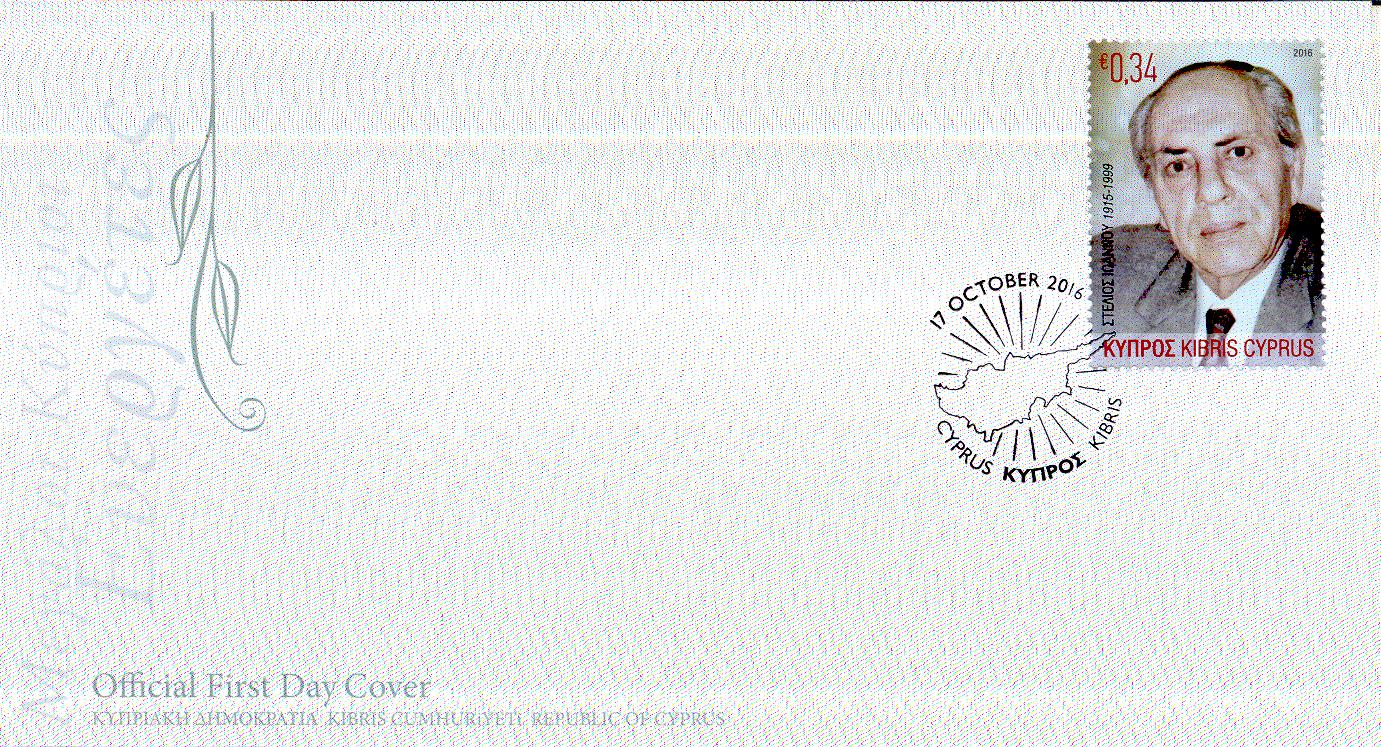
(1.00) Georgios S. Frangoudes. He was born in Limassol in 1869 and died in Athens in 1939. An inspired visionary, determined to contribute to the people of Cyprus and Greece, he established the Panteion School of Political Sciences in Greece and was a professor and its first headmaster. He studied law at the University of Athens and at the School of Political Sciences in Paris. He was also the Chairman of the Association of Patriotic Cypriots" in Greece. He was a Member of Parliament and Speaker of the Hellenic Parliament and made a great effort to modernise the Hellenic state. In addition to his political activities, he was actively involved in journalism, advocacy and education. In 1901, to promote Cyprus and its traditions, he organised a Cypriot exhibition at Zappeio in Athens. He edited the "Metarythmisi" newspaper in Athens and, due to his scathing articles against those who resisted reform, there were two unsuccessful attempts on his life. He is the author of several studies, literary articles and a significant body of translated work.

(1.00) Porfyrios Dikaios. He was born in Nicosia in 1904 and died in Heidelberg in Germany in 1971. He studied Archaeology at the University of Athens and at the Sorbonne and in Lyon. He was assistant curator at the Cyprus Museum at the age of 25 and from 1951 to his retirement in 1963, he was Director of the Cyprus Antiquities Department. After his retirement, he taught at Universities in America and Heidelberg. His extensive excavations started in 1951 and covered many areas and archaeological sites in Cyprus (Choirokitia, Filia, Vouni, Engomi, Kalavasos, and Sotira). The findings of his excavations in ancient Engomi were published in four volumes in Germany between 1969-1971. He wrote many archaeological articles and studies on the findings of excavations and gave numerous lectured on pre-historic Cyprus at many Universities in Europe, the USA and other countries. He held a number of honorary titles and was a corresponding member of the Heidelberg Academy.

(1.50) Nicos Pantelides. He was born in Nicosia in 1906 and died in 1984. He was a comic actor of the Cypriot theatre and spread laughter with his inherent talent. At the same time he excelled as a director. He is considered a pillar of Cypriot theatre. His performances, as a member of the cast of the Papademetri troupe and "Thiaso Yeliou" (which he founded) in the 60's, were remarkable. He also excelled in the cinema, acting in six films in his time. He was a key member of the Cyprus Theatre Development Organisation (O.TH.A.K.), which merged with the Theatre Organisation of Cyprus after 1961, playing important roles in memorable performances. He cooperated with CyBC, taking part in "Theatrical Memories" in 1972, in Cypriot sketches, televised series and other programmes. He was highly respected by theatre lovers and his colleagues who appointed him Chairman of their Association.

(1.50) Pavlos Xioutas. He was born in Kato Paphos in 1908 and died in 1991. He studied literature at the University of Athens and worked as a teacher in many schools. A scholar, author of many works and folklorist, he left behind a remarkable body of work. He was a very progressive person for his era and he truly loved the common man of Cyprus. He had innovative ideas for his time. The cypriot people owe him much for the survival of these proverbs (Sayings). In his rich three-volume work, he collected, presented, classified and analysed more than 1500 Cypriot sayings. He was actively involved with the people and fought against British colonialism. He was the leader in establishing the Society of Cypriot Studies in 1936. He translated works of Ancient Greek writers. In 1983 the Academy of Athens presented him with an award for his thesis on "Cypriot Folklore of Animals".


Tuesday, April 21, 2015

Intellectual Personalities 4.2.2015

(0.60) Kyriakos Hadjioannou. He was born in Achna in 1909 and died in 1997. He was a teacher, writer, researcher and folklorist. He studied at the School of Philosophy at the University of Athens. He excelled in all areas of his professional career as a teacher for his clarity and methodology in teaching and was particularly loved by his pupils. Between 1960-1963 he was appointed as the first Ambassador of the Republic of Cyprus to Cairo. He gave many lectures to associations, clubs in Cyprus and abroad, and to international academic conferences on folklore, historical, archaeological, linguistic, educational and other matters. His literary work centred on Cyprus is immense and it has earned him his place as the island's leading intellectual author. His five-volume work, "Ancient Cyprus in Greek Sources" is particularly remarkable. This received an award from the Academy in Athens and the Greek intellectual Group of Cyprus. In 1965 he received the title of doctorate from the University of Athens. He received many other distinctions not only from his homeland but also from abroad.

(0.60) Polyxeni Loizia. She was born in Limassol in 1855 and died in 1942. She went to school in Limassol and then studied in Smyurni and Constantinople. After 1878 she came to Cyprus to begin her teaching career, and was renowned for her invaluable services in educating girls. She was the Headmistress of the Limassol School for Girls (1878-1914) and a religious instruction teacher (1914-1923). In addition to her contribution to teaching, she contributed greatly as a feminist towards the empowerment of women. She was invovled in varied social and intellectual activities. She founded "Palladion", the Girl's gymnasium in Limassol and edited an intellectual magazine, under the same name, between 1924 and 1936. She also founded the first women's association in Limassol. She is considetered the first female Cypriot literary writer, who lived and worked in Cyprus. In addition to poetry, she wrote plays, school textbooks and educastional studies. Her work is national with educational content and her poetry is lyrical and patriotic.

(0.75) Loizos Philippou. He was born in Paphos in 1895 and died in 1950. A scholar, historian, researcher, educator and publisher, he was a noted intellectual and social factor in his birthplace and through his intense activity turning it into an intellectual centre during his life time. Although he studied law, he made a significant contribution to Cypriot history and literary research. He wrote numerous scientific studies, edited the newspaper "Paphos" for 20 years as well as the intellectual magazine of the same name. His work on the history of Greek literature in Cyprus during the Turkish occupation is memorable. He was the founder, inspector and leader of the Paphos Scouts Association. His diverse national activities were always related to the survival of Hellenism in Cyprus. He was an active member of the Paphos District Games Association, the National Council and founder and Chairman of "Korivos", the Gymnastics School and of the Paphos District Archaeological Museum.


(0.75) Persefoni Papadopoulou. She was born in Ktima, Paphos, in 1888 and died in Patra, in Pelloponisos in 1948. She graduated from the Arsakeio School in Athens with excellence and immediately started work as a teacher in Famagusta and then in Larnaca as the Headmistress of the town's school. She continued her studies in France and upon he return worked at a Girl's School in Nicosia. After the October uprising in 1931 she took on the management of the Arsakeio Academy in Patra until her death. She was not only the most prominent Greek teacher of her era, but a significant intellectual figure and leading feminist, to whom female educationowes a great deal. She founded "Estiades", the first women's newspaper in Cyprus, which she edited after 1915, taking on the preconceived prejudices and mentalities of her era. She also established a number of women's associations in Famagusta and Larnaca, with a national, educational and progressive purpose. At the same time, she was a remarkable writer whose works include textbooks, poetry, articles and studies of a literary, educational and enternaining nature.

Monday, April 20, 2015

Intellectual Personalities 4.2.2015

The next lot of 12 stamps on Intellectual Personalities were issued on 4.2.2015. 

(0.04) Adamantios Diamantis. He was born in Nicosia in 1900 and died in 1994. A great artist, whose name is synonymous with modern Cypriot art. He captured on canvas the authentic world of Cyprus and as an art teacher he taught one generation after another at the Morphou Teaching College and in schools in Nicosia and has inspired young yet unrecognised local artists. He developed a rich social and cultural influence. As a member of the Society of Cypriot studies, he was involved in the collection of local works of art and in organising the Cyprus Folk Art Museum, of which he was the Director from the time of its establishment. His works of art were exhibited in many solo, group and thematic exhibitions and now adorn many galleries in Cyprus and Greece. His friend, George Seferis, a Noble prize-winning poet, dedicated his poem "Details in Cyprus" to him. In 1993 the Cyprus State bestowed on him the Award for Excellence in Letters and the Arts.


(0.04) Theodosis Pierides. He was born in Tseri in 1908 and died in Bucharest in 1968. An important, left-wing figure and idealist poet, who served with steadfastness the principles of peace and the brotherhood of peoples. He is the brother of George Philippou Pierides, the great Cypriot prose writer. he was initially active in Egypt, where his family lived and form a young age took an active part in social struggles and in the anti-Nazi struggle during the 2nd World War. In the summer of 1947 he came and settled in Famagusta and then went on to Bucharest, only to return to Cyprus after it was declared an independent state in 1960. He used traditional verse and also free verse. His poetry in robust and is characterised by a deep faith and love for man but also for his birthplace, Cyprus. The peak of his poetry is his poem "Cyprus Symphony". He was also involved in journalism and criticism.


(0.50)Maria Rousia. She was born in Cairo in 1894, to parents of Cypriot descent, and after 1914 she lived in Alexandria where she died in 1957. She published articles in "Tahidromos" a newspaper in Alexandria, on social matters; she also wrote articles regarding a woman's place in society, on education and book reviews. She also published travel reviews on Cyprus and Greece, and translated literary works. She was a volunteer nurse in the 2nd World War for the Greek Army in the Middle East. She wrote inspirational letters by the thousand which were sent to soldiers fighting at the front together with socks, jumpers and other letters she published under the pen name "Sister of the Soldier". Between 1939-1956 she was associated with "Cypriot Letters", a magazine, in which she published a total of 26 stories. She also edited a book of essays and other story books and novels. Her work had favourable reviews from eminent artists of her time.


(0.50) Melis Nicolaides. He was born in Larnaca in 1892, having attended the Urban School and the five class semi-gymnasium in the same town. He worked as a teacher on a temporary basis and then became an employee of the Metropolis of Kitium. He emigrated to Athens at a very young age and lived there till the end of his life. He died in 1979. In Athens he devoted himself to literature and all his professional activities were related to this subject. He established a bookshop, "Logotechnia", a publishing firm, and edited "Pnevmatiki Zoe", a literary magazine. He was a founding member of the Hellenic Literary Society and was its general secretary and chairman. He played a very active role in the intellectual life of Athens. He is considered a very important Cypriot prose writer and has great works to his name. In addition to stories and novels, he wrote travel books, plays, articles, speeches and a number of studies on intellectual subjects. Inspired by tradition his work is mainly social and religious, and that is why he was characterised as the "prose writer for the poor and humble, the honest and good people".

Sunday, April 19, 2015

Intellectual Personalities 10.10.2014

The 3rd FDC on Intellectual Personalities in Cyprus is on four stamps about :
(0.64) Antis Pernaris. He was born in Nicosia in 1903 and died in 1980. He was a poet, novelist, journalist and a theatre critic, one of the pioneers of the Cypriot literary generation of the 30's. His literary work is distinguished by its clarity of expression, its lyricism and dedication to the national folk tradition and its national character. Apart from poetry he also wrote stories, plays and studies. His journalistic activity was varied and remarkable, especially in his contribution to Cyprus education. His efforts to establish the demotic language in elementary education and the application of modern education precepts in the education of his birthplace, was quite significant and multifaceted. In 1970 the Ministry of Education and Culture presented him with the award for Overall Contribution to Greek literature in Cyprus.

(0.64) Kypros Chrysanthis. He was born in Nicosia in 1915 and died in 1998. He was a remarkable novelist making a diverse and extensive contribution to Cypriot literature. He was a doctor by profession and for many years was a school physician and a professor of hygiene at the Pancyprian Gymnasium and the Pedagogical Academy of Cyprus. He was a prolific writer and, in addition to poetry, was interested in prose writing, essays and even children's literature. For more than 30 years he was the editor in chief of "Pnevmatiki Kypros", a literary magazine. Over the span of 50 years of literary activity he contributed various articles to the daily press and magazines and was also the informative link on issues regarding intellectual creation between the Greek centre and Cyprus not only during the period of British rule but also following the establishment of the Republic of Cyprus.

(0.85) Costas Montis. A leading Cypriot writer. He was born in Famagusta in 1914 and died in 2004. His large collection of poems has set him apart as a remarkable poet. Many of his works have been included in anthologies, translated into foreign languages and many have been set to music. He wrote in the Greek demotic language and in the idiomatic Cypriot dialect. He also wrote prose and plays for the theatre. He wrote around 40 works for the stage, radio and television. His various satires and lyrics were very successful. He was also a journalist. His contribution in the field of anthologies is also significant. His literary achievement was honoured with the State Prize for Poetry in 1968 and in 1973 he was honoured with an Award for his Overall Contribution to Cypriot and Greek Literacy. In 1994 he was bestowed with the Award for Excellence in letters and the Arts by the Republic of Cyprus. In 1999 he was nominated for the Noble Prize by the School of Philosophy of the University of Cyprus and the Ministry of Education and Culture. In 2000 the Academy of Athens declared him a corresponding member. In 2001 he received an honorary doctorate from the University of Athens.

(0.85) Glafkos Alithersis. He was born in Limassol in 1897 and died in his birthplace in 1965. At the age of 16 he volunteered for the Greek army and fought in th4 Balkan War of 1913. After the war ended he returned to Cyprus and continued his studies ad the Pancyprian Gymnasium. He excelled as an athlete and was a Cyprus champion. He served as a gymnastics teacher in Alexandria where he had emigrated and where he spend his most creative years, always closely associated with Cypriot writers and regularly publishing in Cypriot magazines of the time. He particularly stood out for his poetic work which was multi-faceted and multi-dimensional and revealed in-depth research and reflection. In addition to poetry, he wrote prose, theatrical works essays and studies. His contribution to Cypriot prose is impressive, as was his contribution to modern Greek Letters.

Saturday, April 18, 2015

Intellectual Personalities 10.10.2014

This is the 2nd FDC  with stamps from the Definitive Series on Intellectual Personalities issued by Cyprus in 2014.

(0.41) Loukia Nicolaidou. She was born in Limassol in 1909 and died in England in 1994. She studied painting in Paris (1929) and at the Higher School of Fine Arts (1930-1933) at the Atelier of Lucien Simon. She returned to Cyprus in 1933 and began her artistic creation, opting for European modernism, which had been unknown until then in downgraded artistic environment of Cyprus, instead of the universally accepted naturalism. In 1937 she emigrated to the United Kingdom where she lived in London and then in Penn until the end of 1950s. Her works of art may be found in the State Gallery of Contemporary Cypriot Art, the Limassol Municipal Gallery, the Popular Bank Cultural Centre and in the artist's private collection in Great Britain.
(0.41) Telemachos Kanthos. He was born in Alona in 1910 and died in 1993. He is considered one of the most significant artists of modern Cypriot painting. He served as an art teacher at the Famagusta Gymnasium (1942-1969). In addition to being a painter, he was a distinguished etcher and stage designer. In his works he depicts life, but also the tragedy of the Cypriot people after the Turkish invasion in 1974. He created from life experience, whatever he was feeling, capturing the eyes of the soul and the heart. He was a pioneer in establishing the Cypriot Chamber of Fine Arts. He expounded rich cultural activity and was one of the first Cypriot painters to have solo exhibitions on our island. His works of art are found in several galleries in Cyprus, Greece and his daughters' private collection in Vienna. He was honoured for his contribution to art by the Academy and the University of Athens.
(0.50) Michael Kashalos. He was born in Assia, in tne Mesaoria, in 1885 and died a refugee in 1974, having been badly wounded by the Turkish army as it invaded his village. Self-taught, he started painting in 1957 and became a great and renowned self-taught artist in his old age. A naive artist, who expresses the beautiful, simple, authentic life and customs of the Cypriot countryside, Kashalos was a painter of the peasantry and surpassed the boundaries of the small island of Cyprus. His works adorn several private, state and other
(0.50) George Pol Georgiou. He was born in Famagusta in 1901 and died in 1972. He studied law in London but did not practice the profession and devoted himself exclusively to his great love: painting. Despite the fact that he was self-taught, his innate talent and artistic genius made him a pioneer and a very remarkable, acclaimed artist. Most of his works of art, characterised by the sense of composition, feature the people and images of Cyprus. He developed one of the most unique and characteristic visual styles in modern Cypriot art. He has exhibited his works of art in many solo and group exhibitions both in Cyprus and abroad. His works adorn a number of collections such as that of the Archbishop Makarios III Foundation, the Gallery of Contemporary Cypriot Art, and collections abroad. Many of his paintings have been enclaved in Famagusta since 1974 and have not been seen since.

Friday, April 17, 2015

Intellectual Personalities of Cyprus 10.10.2014

My friend dear friend Merja sent me 6 Fdc's with four definitive stamps on each fdc, honouring Intellectual Personalities of Cyprus. The first four stamps on an FDC and details about them are given below :-
(0.04) Stylianos Hourmouzios. He was born in Omodos in 1850 and died in 1937. Between 1874-1880 he was a leading cantor at Agios Antonios Church in Nicosia and from the beginning of the 19th century up until 1916 he was a cantor in Agia Napa Church in Limassol. Between 1917-1931 he taught Byzantine music at the Pancyprian College of Education. In 1936 the Church of Cyprus awarded him the title of "Lord Cantor". He was a pioneer in creating the movement for studying and spreading Byzantine music. He wrote a number of studies and articles on Ecclesiastical music and published books on teaching Byzantine music. He was also involved in journalism. In 1884 he published the "Trumpet", a weekly newspaper in Limassol. In 1901 he was elected a corresponding member of the Ecclesiastical Musical Society in Constantinople.

(0.04) Theodoulos Kallinikos. He was born in Lefkonikon in 1904 and died in 2004. He came to Nicosia at a very early age and attended lessons in Byzantine music under Stylianos Houmouzios, the renowned music teacher. He studied Byzantine music in Athens and at the National Conservatory, graduating with distinction. Upon his return to Cyprus, he was the leading cantor at Agios Ioannis Church in Nicosia. In 1937 he established the School of Byzantine Church Music, from which hundreds of students graduated, serving as cantors in many parts of Cyprus. He founded the Church Choir. He published many ecclesiastical books and a volume on fold songs of Cyprus, titled "Cypriot Folk Muse". He collected these songs by travelling around all the villages in Cyprus from 1924 and writing them down as he heard them from village elders, thus contributing to maintaining our musical tradition and rescuing a truly priceless cultural treasure. The Holy Synod of the Church of Cyprus awarded him the honorary title of "Lord Cantor" of the Autocephalous Church of Cyprus and the Academy of Athens honoured him for his work and contribution to Byzantine and Cypriot folk music.

(0.34) Achilleas Lymbourides. He was born in Nicosia in 1917 and died in 2008. He was a pioneer composer of Cypriot folk songs and contributor to he theatre He set music to the lyrics of eminent poets in the Cyprus dialect. With Costas Montis, he established the first professional theatre in Cyprus, known as "To Lyricon" ("The Lyric"), which staged his own productions wit great success. Lymbourides' legacy to Cypriot literature is a number of theatrical plays, in particular genre comedy, which were transferred to television. The melodies set to the lyrics of folk and other Cypriot poets, including his own, represent the folk music of Cyprus in the best possible way. In addition to being a composer, he was also a remarkable writer. In the 70s and 80s he produced Cypriot studies and edited books on the history Cypriot journalism, the British rule in Cyprus and others. He received awards from the Municipality of Nicosia, the University of Cyprus and "Adouloti Kyrenia" for his valuable contributions and in 1998 the Cyprus State bestowed on him the "Award for Excellence in Letters and the Arts".

(0.34) Sozos Tombolis. He was born in Lysi in 1914 and died in 2002. He attended the Pancyprian Seminary in Larnaca and then the Athens National Conservatory. He was subsequently appointed a professor of music (1938-1974) at Secondary schools of education. At the same time he was a leading cantor at Faneromeni Church in Nicosia. He established and managed the Faneromeni quartet, a mixed ecclesiastical choir in the 1980s. He also established an orchestra for string and wind instruments at the Pancyprian Gymnasium and many other choirs for associations and foundations in Nicosia. At the same time he also started researching and studying Cypriot folk music, recording musical rhythms and the melody of our folk songs. He was also interested in the palaeography of Byzantine music. He received an award in 1967 for his book on Cypriot Rhythms and Melodies by the Academy of Athens and in 1995 the Cyprus State bestowed on him the "Award for Excellence in Letters and the Arts".

Saturday, November 8, 2014

Cyprus - Intellectual Pioneers 30.6.2014


"Intellectual Pioneers" - 150 years since the birth of the French artist Toulouse Lautrec, 450 years since the artist's death Michael Angelo, 450 years since the birth of scientist Galileo and 400 years since the death of the painter El Greco (born Dominikos Theotokopoulos).

El Greco - Dominikos Theotokopoulos famously known as "El Greco" was born in 1541 in Candia, Crete. As a young icon painter he left his native land circa 1567 and traveled to Venice. There he adopted Catholicism and probably became a pupil of Titan. He moved to Rome when his critical attitude to Michelangelo’s works did not endear him to the local art world. A friendly Cardinal invited him to travel to Spain where he settled in the city of Toledo until his death in 1614. One of his famous paintings the "Burial of Count Orgaz" as in the Church of St. Tome in Toledo.

Michelangelo di Lodovico Buonarroti was born in 1475 in Capressa, Italy. He was renowned as a sculptor, painter and poet. He enjoyed the patronage of Lorenzo di Medici and in 1496 he was summoned to Rome by Cardinal San Giorgio who bought his "Cupid". He is well known for his sculpture of the "Pieta" (1498-1499) for a French Cardinal's tomb in Rome, for the painting of the "Sistine Chapel" (1508-1512) and the "Last Judgement" (1537). In 1538 he was appointed architect of St. Peter's where he devoted the rest of his life until his death in 1564.
Galileo Galilei was born in 1564 in Pisa, Italy. He entered Pisa University but left without degree in 1585. In 1592 he entered Padua University where as professor of mathematics he taught until 1610. In 1609 having heard of the invention of the telescope in the Netherlands, he set about to build his own improved version. Fundemental discoveries about the movements of the planets are attributed to him, but his unorthodox views were condemned by the Catholic Church who had him imprisoned. Even then he continued his research. In 1993 the Catholic Church recognized the validity of his scientific work.
Henri de Toulouse-Lautrec was born in 1864 in Albi, France. At the age of 14 he broke both his legs resulting in permanent abnormality as they ceased to grow. In 1884 he settled in Montmartre where he became a regular visitor at the "Moulin Rouge", painting and drawing barmaids, dancers, actors, clowns and society at large. He was a gifted painter but his alcoholism forced him into a sanatorium in 1899. He recovered and resumed his life until he died in 1901.

Thank you Dear Merja.

Monday, March 31, 2014

Robert Fulton 19.8.1965

This issue commemorates the 200th anniversary of the birth of the inventor of the first successful commercial steamship, the Clermont. And very aptly this 5¢ Robert Fulton stamp; Clermont stamp was released at Clermont, NY on August 19, 1965.

Robert Fulton (November 14, 1765 – February 24, 1815) was an American engineer and inventor who is widely credited with developing the first commercially successful steamboat. In 1800, he was commissioned by Napoleon Bonaparte to design the Nautilus, which was the first practical submarine in history. He is also credited with inventing some of the world's earliest naval torpedoes for use by the British Navy.

Fulton became interested in steamboats in 1777 when he visited William Henry of Lancaster, Pennsylvania, who had earlier learned about James Watt's steam engine on a visit to England.

Thank you Merja.

Tuesday, December 17, 2013

Alexander Hamilton

U.S. 1957 3¢ Alexander Hamilton and Federal Hall stamp commemorates the 200th anniversary of the birth of Alexander Hamilton, the first U.S. Secretary of the Treasury. Hamilton was one of the key figures in the early days of the United States. He established most of the fiscal policies of the young nation and helped found the U.S. Mint. 

Hamilton was an influential player behind the scenes. With the help of John Jay and James Madison, he wrote the “Federalist Papers,” which were a series of 85 published essays supporting the proposed U.S. Constitution. They are still regarded as the primary source for interpretation of the Constitution. Hamilton’s influence extended to the Presidency, where he worked hard to influence the elections of 1796 and 1800, between John Adams and Thomas Jefferson. 

The stamp also features an image of Federal Hall, located in New York City. It served as the first U.S. Capitol of the United States, and was where George Washington was sworn in as President. The Hall was also where the Bill of Rights was signed. 

When Congress moved to Philadelphia in 1790, Federal Hall once again housed the New York City government. The building was destroyed in 1812, and a replacement building was completed in 1842. That building served as the first U.S. Customs House. 

Statesman Alexander Hamilton Killed In Duel. Once an impoverished immigrant orphan, Alexander Hamilton (1757-1804) became George Washington’s most trusted aide, a lawyer, and the first Secretary of the Treasury. As Secretary of the Treasury, Hamilton established the first Bank of the United States and proposed the seagoing branch of the military that eventually became the U.S. Coast Guard. He also played a crucial role in the passage of the Naval Act of 1794, which led to the creation of the U.S. Navy. 

Long-time acquaintances during the fight for independence, Hamilton and Vice President Aaron Burr later became bitter political rivals. When a Burr supporter insulted Hamilton’s father’s honor in 1801, 19-year-old Philip Hamilton challenged him to a duel. Philip Hamilton died of injuries he suffered during the duel, which was held in Weehawken, N.J. Three years later, Burr killed Alexander Hamilton in a duel in exactly the same location with the same pistol used to kill Hamilton’s son.

Thank you Merja.

Tuesday, October 29, 2013

Prominent Americans Series - Albert Gallatin 30.1.1967

Prominent Americans Series. The Prominent Americans Series recognizes people who played important -  roles in U.S. history. Officials originally planned to honor 18 individuals, but later added seven others. The Prominent Americans Series began with the 4¢ Lincoln stamp, which was issued on November 10, 1965. During the course of the series, the 6¢ Eisenhower stamp was reissued with an 8¢ denomination and the 5¢ Washington was redrawn.

The light green 1 ¼¢ denomination stamp pictures Albert Gallatin. Gallatin (1761-1849) who was born in Geneva, Switzerland. His aristocratic family included physicians, statesmen, and soldiers – one of his relatives commanded a battalion at the battle of Yorktown. At the age of 19, Gallatin emigrated to the United States. Under the terms of the Articles of Confederation, he became a citizen after nine years of residency. The stamp was aptly postmarked in the City of Gallatin, MO on 30.1.1967.

Gallatin taught French at Harvard University, but was drawn to public service. In 1790, he was elected to the Pennsylvania legislature. Gallatin was elected to the U.S. Senate in 1793. However, he was forced from office when opponents claimed he had not been a citizen long enough. In 1794, Gallatin was elected to the U.S. House of Representatives. He held that office until 1801, when President Thomas Jefferson appointed him Secretary of the Treasury.
 Gallatin was very effective as Secretary of the Treasury. He played a key role in the financial details of the 1803 Louisiana Purchase. In this transaction with France, the U.S. gained 827,987 square miles of land. Eventually, all or parts of 15 states were created from this land, including eastern Montana. Gallatin made the Louisiana Purchase possible without raising taxes. He was also key in resolving the constitutional issues that made this unprecedented purchase quite complicated.
He was a signatory of the The Treaty of Ghent, signed on 24 December 1814 in the Flemish city of Ghent, was the peace treaty that ended the War of 1812 between the United States of America and the United Kingdom.  
 A remarkable statesman, Gallatin even helped to plan the Lewis and Clark Expedition, which explored the lands of the Louisiana Purchase and America’s northwest. The Lewis and Clark Expedition named the Gallatin River in Montana in his honor. Gallatin County, Montana, took its name from this river, and subsequently from this influential, yet little-known statesman.

Thank you Dear Merja for this fine FDC.